
SOMC160110K0GRZ: Full specification and measurement report
Data-driven overview of key parameters, stability, and thermal modes of the resistor network in a 16‑SOIC package.
This report provides a data-driven overview of key parameters and practical measurements of a resistor network selected for stability and thermal assessment. Main ratings and limits: nominal 10 kΩ, ±2% tolerance, power per element ≤80 mW, total power ~1.2 W, tempco (TCR) ≈±100 ppm/°C, 16‑SOIC package (5.59 mm width). The goal is to provide engineers with a clear picture of real-world characteristics under typical test conditions.
Evidence: parameters indicate that the component is designed for bussed/network configurations and high-dynamic signals with limited power dissipation.
Explanation: this makes the component suitable for signal chains and measurement bridges where packing density and temperature stability at low power dissipation are important.
Overview and Purpose (Background)
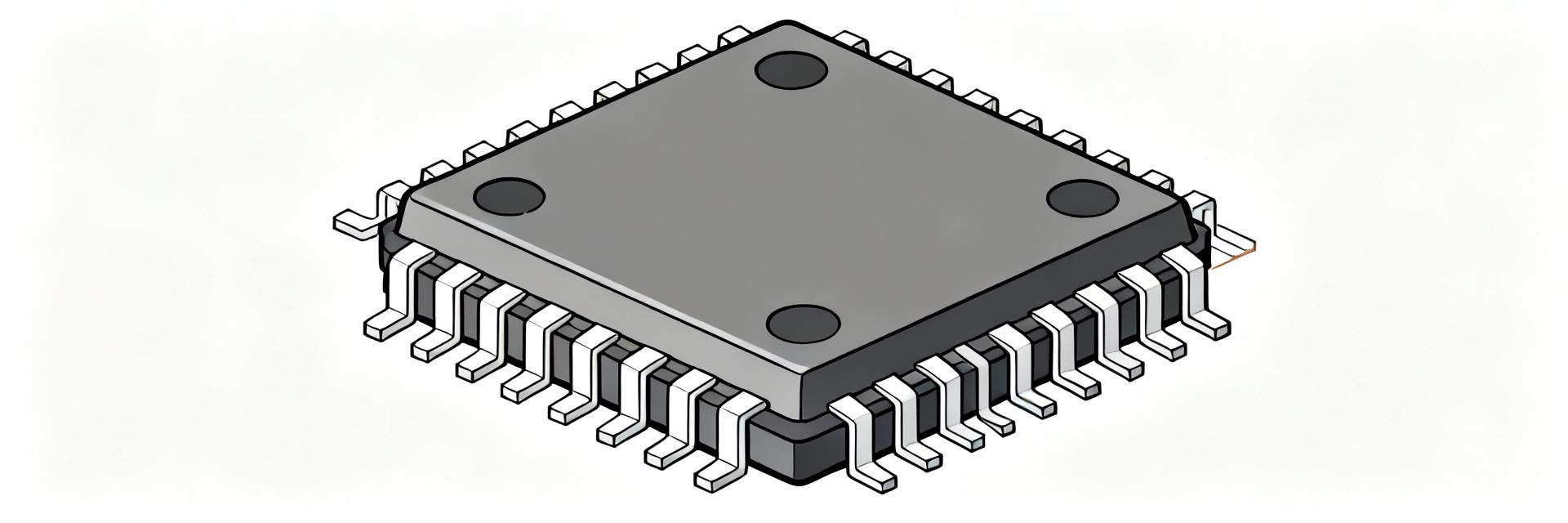
Key Parameters and Applications
Point: the composite parameters of the network define its field of application.
Evidence: 10 kΩ, ±2%, and a TCR of about ±100 ppm/°C, combined with a total allowable power of ~1.2 W, provide a balance between accuracy and allowable thermal conditions.
Explanation: such networks are useful for calibration circuits, dividers, and temperature-compensated schemes where compactness and consistency between elements are critical.
Form Factor and Packaging
Point: the form factor dictates mounting solutions.
Evidence: SMD-type in 16‑SOIC, 5.59 mm body width, typical PCB requirements—refer to the package parameter table and pinout view.
Explanation: high density saves space but requires careful PCB layer design and adherence to recommendations for heat dissipation and placement of ground/power planes.
Detailed Technical Specification Breakdown
| Parameter | Value / Condition |
|---|---|
| Nominal Resistance | 10 kΩ |
| Tolerance | ±2% |
| Power (Element/Total) | ≤80 mW / ~1.2 W |
| TCR (Tempco) | ≈±100 ppm/°C |
| Package | 16‑SOIC (5.59 mm) |
Electrical Characteristics — Ratings and Tolerances
Point: accuracy and resistance distribution. Evidence: 10 kΩ nominal with ±2% tolerance ensures a deterministic value spread; the bussed configuration helps reduce mutual interference in symmetric measurements. Explanation: for you, this means that in assemblies where element matching is important, the network will provide predictable error without the need for individual trimming of each resistor.
Thermal and Mechanical Characteristics
Point: TCR and thermal reliability define long-term stability. Evidence: TCR of approximately ±100 ppm/°C and operational stability of elements in the −40…+125 °C range; 80 mW per element with a total thermal margin of ~1.2 W. Explanation: when designing, consider thermal drift and power distribution on the PCB—local overheating of a single element will increase discrepancies, so layout with respect to heat flow is recommended.
Measurement Methodology and Test Bench
Recommended Test Circuit and Equipment
Point: standardized circuit for repeatable measurements. Evidence: for measuring resistance and TCR, use the four-wire (Kelvin) method, a stable current source, and a low-noise digital voltmeter; temperature control is achieved via a calibrated thermal chamber or platform. Explanation: applying the four-wire method eliminates the influence of contact and lead resistances, which is critical for accurate measurements of small changes.
Measurement Procedure and Typical Errors
Point: sequence of actions to obtain correct data. Evidence: steps include element identification, measurement at room temperature, temperature ramping, load testing, and recording drift; expected errors are related to instrument noise and temperature instability. Explanation: following the methodology will reduce result spread and provide reproducible values for comparing component batches.
Usage Examples and Design Solutions (Cases)
Circuit Examples: Divider, Pull-up, and Terminator.
Point: typical applications in real devices. Evidence: in dividers and pull-up circuits, 10 kΩ provides a measurable correction range; TCR and tolerance affect the absolute accuracy of the divider as temperature changes. Explanation: when choosing a scheme, you can vary nominals and compensate for TCR by selecting paired elements or adding active calibration.
PCB, Placement, and Thermal Management.
Point: PCB rules for stable operation. Evidence: heat distribution, heat dissipation from hot elements, minimization of adjacent heaters, and use of thermal traces. Explanation: proper placement and use of power/ground planes will reduce local overheating and ensure a more stable TCR during device operation.
Engineer's Checklist
Point: decision-making criteria.
Evidence: look for compliance with limits: linearity, TCR, tolerance, power, footprint, and stock availability.
Explanation: if the parameters match your thermal budget and accuracy requirements, the network will be a good choice.
Debugging and Modernization
Point: operational issues. Evidence: overheating of elements, shift due to gradient. Explanation: measures include relocation, thermal paths, or replacement with components having better TCR.
Conclusion
Point: final assessment of component suitability for precision measurement and signal circuits. Evidence: the combination of 10 kΩ, ±2% tolerance, TCR ≈±100 ppm/°C, and total power of ~1.2 W indicates a balanced solution for dense SMD designs. Explanation: you get a cost-effective and compact network with acceptable stability, but for temperature-critical applications, calibration should be provided or components with better TCR should be chosen.
- Key criterion is matching consistency in the network: for dividers and bridges, this is more important than the absolute value, ensuring measurement repeatability.
- Thermal management is critical: distribute power across the board, account for derating, and avoid local heating to maintain accuracy.
- Testing procedures and four-wire measurements yield reproducible results and allow for an informed decision when selecting component batches.
Frequently Asked Questions
What role does TCR play in selecting the SOMC160110K0GRZ?
TCR determines how much the resistance will change with temperature; at ±100 ppm/°C, the change for 10 kΩ will be small, but in high-precision circuits, this may require calibration or compensation. Testing under load and in a thermal chamber is recommended to confirm stability.
Is the network suitable for bridge circuits and dividers?
Yes: the network configuration and close nominal values help reduce systemic error in bridges and dividers. It is important to monitor thermal effects and use four-wire methods during measurement for precise matching.
What is a typical batch verification methodology and what metrics should be recorded?
Methodology: identification and labeling of elements, baseline measurements at room temperature, temperature ramping, testing under real load. Record: absolute resistance, spread between elements, TCR, difference under load, and behavior during thermal cycling.